When the rain stopped on Sunday, I pulled out my Infrared camera and got a few shots of the Scout rafts on the water at Arrowe Park for KonTiki 2016.
making things - digital, analog, and the confluence of the two. Featuring the OctarinePi camera
Browse:
- octarinepi
Showing posts with label octarinepi. Show all posts
Tuesday, May 17, 2016
Thursday, January 7, 2016
Saturday, December 26, 2015
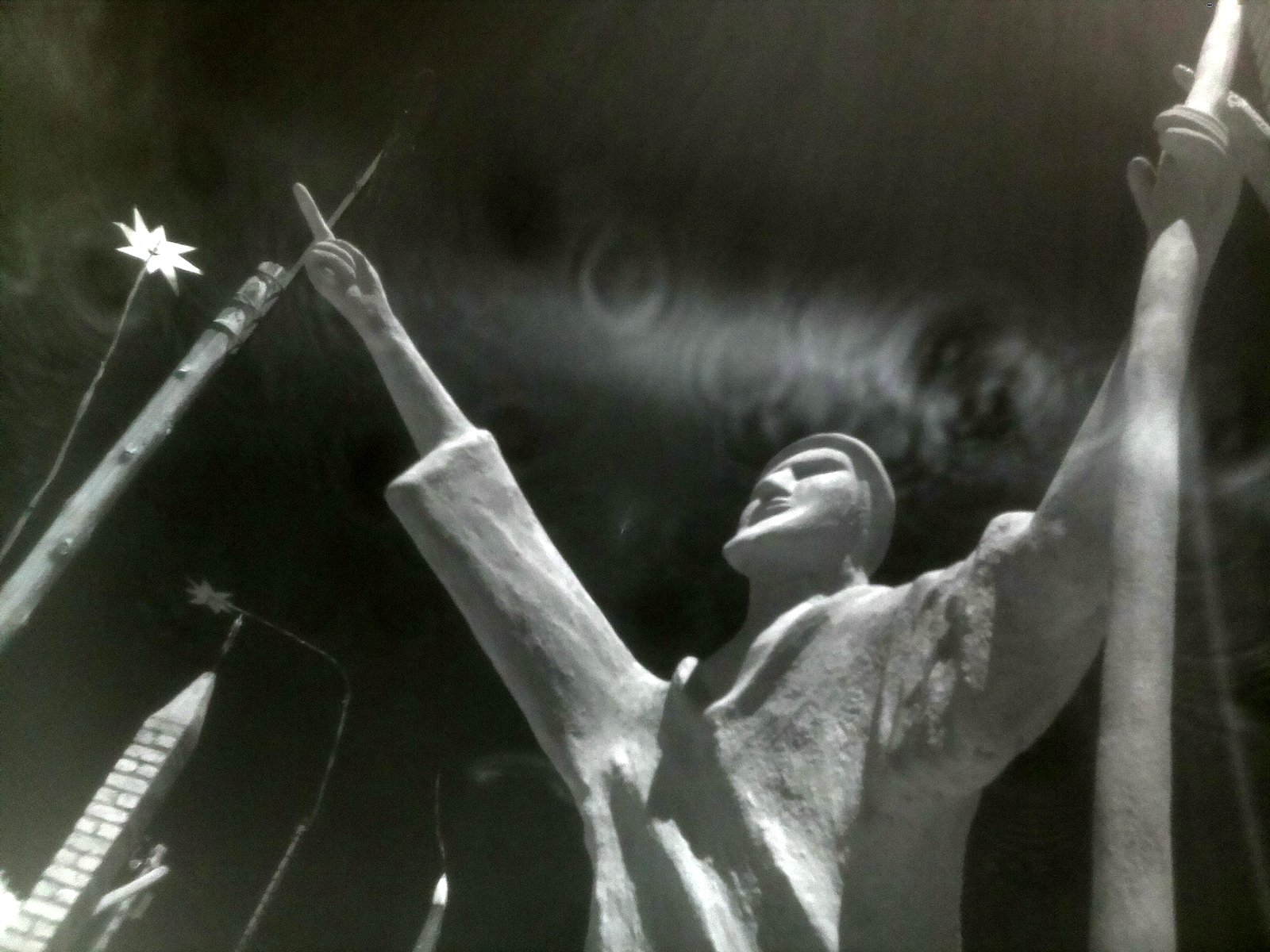
The Owl House
The Owl House is a museum in Nieu Bethesda, an isolated town in the Karoo. This house was converted into an artwork by Helen Martins, working with a number of assistants, notably Koos Malgas. A long trip down a dusty road is worthwhile for the sight of this extraordinary house and garden. Some of my IR photographs from the trip are here.
![]() |
| The camel train looking towards the East |
![]() |
| A traveller pointing to the East |
![]() | |
| Cat at entrance to the Camel Yard |
![]() |
| A figure, said to represent Miss Helen, looking East |
![]() |
| Giraffe Necks |
![]() |
| Multiple exposure collage of all IR photographs I took at the Owl House |
Thursday, December 24, 2015
Saturday, August 1, 2015
exploreza instameet at Rand Airport
On the 1st of August, Phoenix Rover Crew attended an instameet with exploreza at Rand Airport. I took the infrared camera along and got some interesting photos.Thursday, March 19, 2015
Cape Town Infrared
We spent the weekend in Cape Town for a wedding, and I was able to take my camera to Audacia estate for Root44 parkrun, and up Table Mountain on Sunday. Here are some pics.
I'm really happy with how the camera works in the field- it is as easy to use as any other point and shoot.
Thursday, October 16, 2014
Hillbrow and Thunderstorm
Some photos from Medical School and Parktown Ridge during and after yesterday's storm. Corrected for contrast, no colour correction.
Monday, October 13, 2014
Debugging
Apart from a few more test shots at Arrowe Park this weekend, I worked on a few of the snags I still have, and have made good progress:
2.
Files
to have unique names so that names are not duplicated from session to session
3.
Images
are rotated to appear upright before saving
4.
Labels
for mode switch
5.
Plugging
in a flash drive to the USB port copies all images and videos to flash drive
6.
Lens
correctly aligned with front face if camera so that photographs line up
1.
Switching
between different camera modes via hardware switch ( TBC 29 September)
7.
Final
cutting plans for case, 3d model for lens pinwheel and camera Python script to
be uploaded to community model sharing websites
Friday, October 3, 2014
Octarine Pi Camera (almost) complete!
After six months of fiddling, my infrared Raspberry Pi based camera is finished. Apart from a few software tweaks to interface properly with the mode switch, it's working perfectly, and runs for about three hours on the RS775-7504 battery.
UPDATE- some test photos are up here.
The photo above shows how things look through the three different filters. Here's a pano in pure infrared:
The PiBow-inspired case design is up on Thingiverse, with the preliminary lens assembly published on ShapeWays here and here.
Here's how the camera looks, and I'll be collecting more infrared photographs this weekend
Here's a brief explanation of what the filters do and what the sensor is capable of. Unfortunately not Predator style thermal imaging, but near infrared is still pretty interesting
Wednesday, September 24, 2014
Hardware complete

I sat down today and completed the hardware for the Octarine Pi camera. This involved a bit of filing and grinding, some soldering of a power lead, the rotary switch and an indicator LED, and lots of assembling and disassembling of the stacked chassis. Everything appears to be working now so I can get back down to finishing off the programming in the next few days.
Thursday, September 11, 2014
Lasercut case- dry fit
I collected the test cut of the case last night, and checked it against the components:
This video only shows the Raspberry Pi in the case at the moment because there are a couple of adjustments I need to make- slight dimensional inaccuracies because I measured everything with a ruler instead of a vernier caliper, and ratoinalisation of cuts- removing material I don't need and adding in one or two places where things are a little weak. I'll upload a CC-licensed verison of this in keeping with the source license of the pibow I started from. Adjustments will be made to the DWG file and I should have a final fit cut in white oak next week.
Wednesday, September 10, 2014
Dry fit of case
This evening I'll be collecting the mdf parts for a test fit of the final camera assembly. Better pics to follow once I get the parts
Friday, September 5, 2014
lasercut case plans
The camera case is just about ready to lasercut, once I've done some sanity checks to make sure there is space for everything. I think I might err on the side of making the holes inside a bit smaller than needed and opening up with a file where needed. Sending this off now to get some advice on file formats etc. before lasercutting. The case is based on the Pibow model from Thingiverse, modified in SketchUp
Wednesday, September 3, 2014
Infrared video tests
These videos were attempted 90fps tests but due to the incorrect firmware being loaded on the Pi, they only recorded at 25fps. The video above is an infrablue walk through the trees, with an infrared action shot below.
Rudimentary Python scripting
It's been about fifteen years since I last programmed with any kind of seriousness. Sat down last night and got some definitions working in Python. Once I attach the mode switch to the GPIO pins, I'll be able to set the python script up to respond to the hardware switch to select the appropriate camera mode.
Google, the PiCamera module reference and Getting Started with Raspberry Pi have been my friend.
Subscribe to:
Posts (Atom)